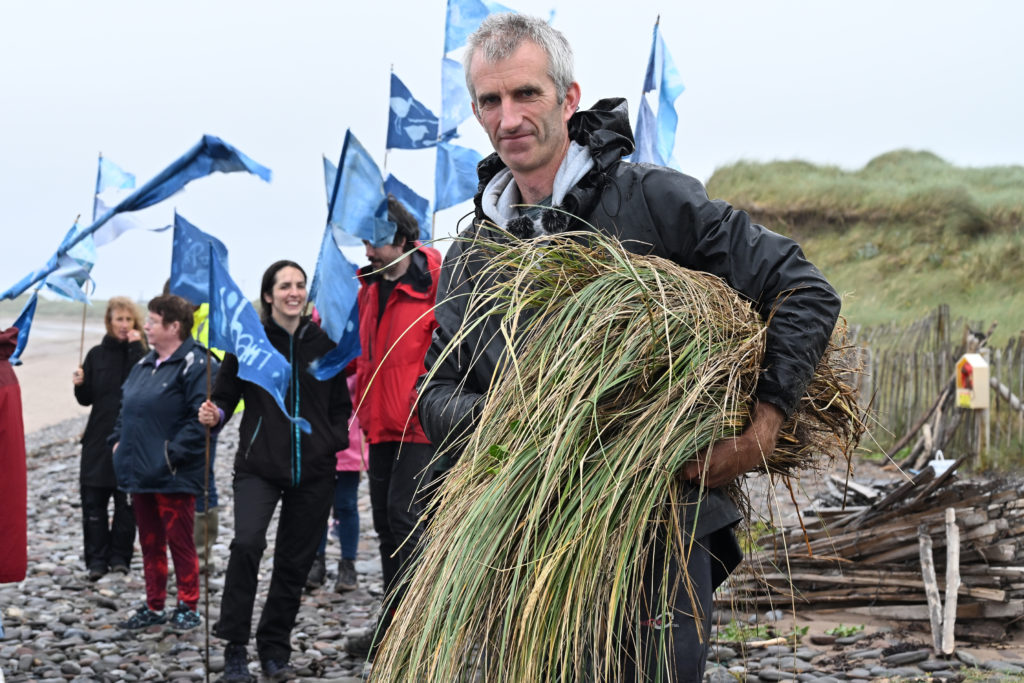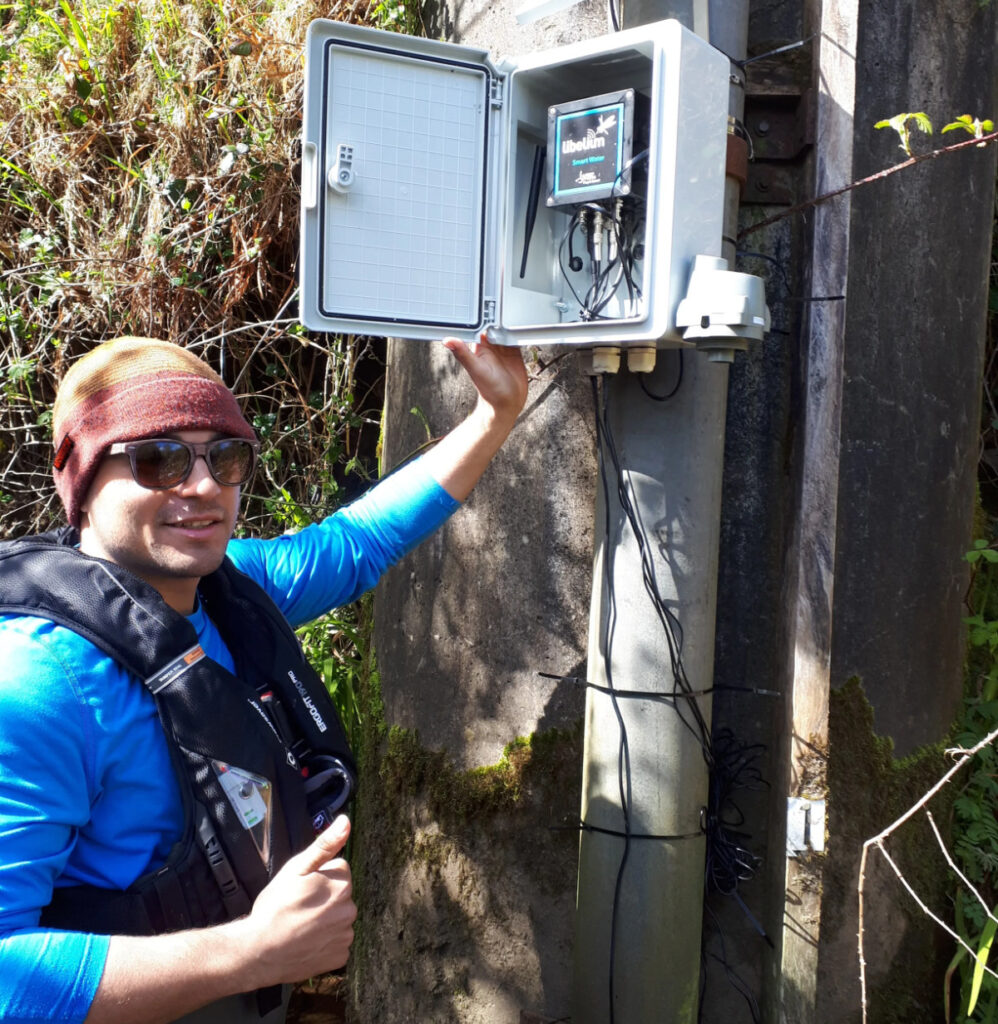
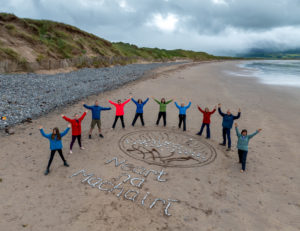
Neart Na Machairí brought together a team of artists, local community partners and community organisers to explore how coastal communities can prepare to adapt to the effects of climate change and biodiversity loss. This project centered on an interdisciplinary approach, combining local place-based knowledge, creative practices and scientific knowledge to help the wider community reflect on, discuss and co-create ways to respond to predicted challenges.
During these two years, Maharees Conservation Association developed a community-led adaptation planning process to strengthen local decision-making, ensuring the wider community has an opportunity to voice their vision for the future and highlight priority action through surveys and public workshops. This multimodal approach to engagement at the local level is key for ensuring a Just Transition as the survey in particular (completed by 82% of the population) gives everyone a voice.
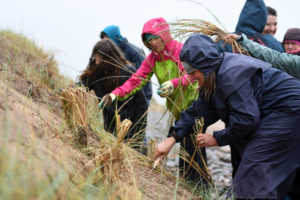
Our artists and project designer have explored and developed a collection of creative approaches and tools to engage with and listen deeply to diverse perspectives within the community. These approaches have ranged from co-creation workshops with the project team, to cyanotype and willow-weaving workshops, to local feasts created entirely from ingredients sourced within the Maharees. Love and pride of place are key cornerstones for future adaptation.
Events:
These events were developed through co-creation workshops, planning meetings and field trips to other communities with the project Steering Group (Deirdre de Bhailís, Martha Farrell, Aidan O’Connor, Jeanne Spillane & Patricia Herrero) and our community partners, representing hundreds of hours of volunteer effort, alongside a reflective learning process led by Dr. Clare Watson and the creative support of our three embedded artists, Emer Fallon, Silke Michels and Zoë Uí Fhaoláin Green and Project Designer Zoë Rush.
Public Community Events
- Launch Event, May 2024
- Learning Day 1: World Sand Dune Day, June 2024
- Learning Day 2: Preparing for a Changing Climate, July 2024
- Learning Day 3: Resilient Seas, Resilient Communities, August 2024
- Winter Gathering, December 2024
- World Sand Dune Day, June 2025
- Harvest of Ideas, sound walk and potluck feast, August 2025
- Movie Night at Spillane’s and Project Close, December 2025
- Series of community household surveys and climate adaptation workshops led by Maharees Conservation Association through 2024 and 2025; alongside story collections and recordings by artists.
Project Talks and Exhibitions
- The Art of Sustenance, Sisterhood and Solidarity, Siamsa Tire, March 2025
- Feile na Bealtaine, May 2025
- Neart na Machairí Exhibition, Tralee Museum, October 2025 – January 2026
Learning
Dr. Clare Watson led a reflective learning process throughout Neart na Machairi. This process involved three rounds of interviews with both the Steering Group and the Community Partners (May 2024, September – December 2024, November 2025) and an analysis of the findings alongside policy recommendations for the Maharees and other communities interested in similar projects.
Read:
View:
- Outcomes and Impact Table [PDF]
- Media Table [PDF]
Creative Response
Throughout the talks, walks, field trips, creative exercises and experiences of Neart na Machairí, the project team asked themselves “How can we build our resilience?“ Neart na Machairí was a milestone along the Maharees communities’ ongoing adaptation journey, giving the team time and space to explore pathways for involving the whole community in considering and discussing the future they want, as well as gathering ideas for specific actions the community could take in the future. In the second year of the project, smaller teams formed to take forward and experiment with the most promising approaches while the rest of the ideas were collected into a “seed- bank.” Below are some of the creative responses.
Listen
Seven podcast episodes weave together voices of Maharees fishers, surfers, conservationists, food-growers, business owners, and visitors with those of climate, ecology and biodiversity experts, to reflect on past and future challenges and celebrate what they hold precious about the Maharees. This podcast was created by artists Emer Fallon, Zoë Uí Fhaoláin Green and Silke Michels and the Maharees community, with technical support and composition by Chris Somers.
Read:
- Deep Mapping Series [PDF] co-created by Emer Fallon, Silke Michels, Zoë Uí Fhaoláin Green and the Maharees community.
- Go Gently on Maharees [PDF], a regenerative tourism flier. This idea was led by community partner Mairead Kinsella, with support by the wider Neart na Machairí project team.
View:
- Neart na Machairí Documentary [on Vimeo]
Find out more about the project at the Creative Coastal Resilience website